Why methodo?
Why methodo?


How our approach works in practice?
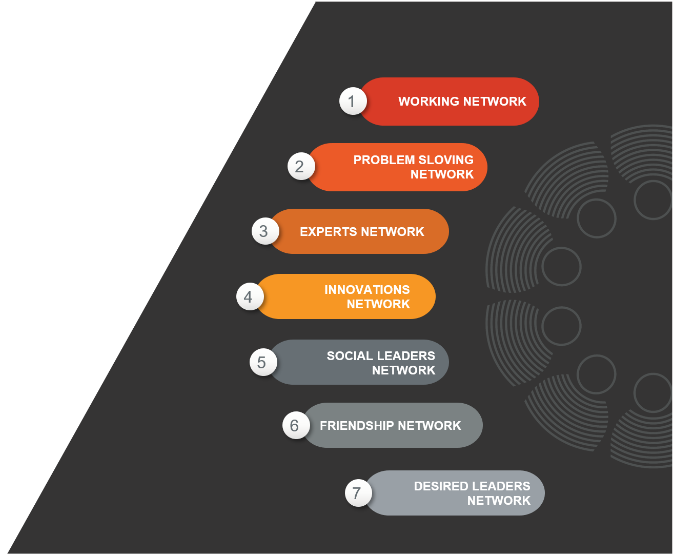
Network analysis covers the study of seven distinct networks, each serving a specific purpose.
Leadership Scanner is often used in combination with organizational climate or 360 feedback tools, providing a deeper and more comprehensive view of talent management and organizational development processes.
The tool integrates network analysis with perception-based insights, enabling HR Business Partners to design targeted interventions across key areas:
- Succession planning and talent management
- Leadership development
- Talent engagement and retention
- Mentoring and knowledge transfer
- Organizational design and workforce planning
- Change management and cultural transformation
01
WORKING NETWORK
Represents the organization’s core knowledge and technical capability. Leaders in this network form the intellectual backbone of the company. Concentration of expertise in a small group increases burnout and continuity risks. Effective mentoring and succession planning depend heavily on engagement within this network.
02
PROBLEM SLOVING NETWORK
Shows who people rely on when facing challenges. Central figures are typically managers or recognized professionals. These individuals often demonstrate leadership potential and are strong candidates for future managerial roles. Their behavior and mindset spread quickly and can positively or negatively impact organizational climate.
03
EXPERTS NETWORK
Represents the organization’s core knowledge and technical capability. Leaders in this network form the intellectual backbone of the company. Concentration of expertise in a small group increases burnout and continuity risks. Effective mentoring and succession planning depend heavily on engagement within this network.
04
INNOVATIONS NETWORK
Shows who drives improvement and new ideas. Innovation leaders actively seek better ways of working, challenge existing processes, and take initiative in exploring new opportunities. Organizations benefit when these employees are encouraged to share ideas and given space to experiment.
05
SOCIAL LEADERS NETWORK
Reflects informal influencers of organizational culture. Social leaders shape morale, communication, and collective energy. Without their support, organizational climate can deteriorate quickly. Their engagement accelerates positive change and strengthens cultural alignment.
06
FRIENDSHIP NETWORK
Represents trust-based relationships and emotional connectivity. Leaders in this network stabilize organizational climate and help resolve conflicts. A drop in their engagement often triggers a domino effect across teams, leading to rapid climate deterioration.
07
DESIRED LEADERS NETWORK
Shows whom employees aspire to work with or learn from. These leaders are usually experienced and influential. Limited access to them restricts knowledge transfer and slows decision-making. Their involvement is critical for mentoring and succession planning.